

One of the first questions homeowners ask me when they are thinking about selling is, “Katie, what do you think my house is worth?” It is an important question, but there is another question I think matters just as much: What price will make today’s buyers pay attention?
Those are not always the same number.
Pricing a home is not about picking the highest number we can justify and hoping someone negotiates with us. It is about understanding what buyers are seeing, what comparable homes have actually sold for recently, and where your property needs to sit in the market to generate serious interest. As I always tell my sellers, the goal is not simply to sell quickly. The goal is to create enough buyer confidence and competition that we protect your financial outcome while keeping the listing from sitting unnecessarily.

Not sure where to start? Neither were most of our clients.
That distinction is especially important in Hendersonville right now. Zillow reported an average Hendersonville home value of about $416,631 as of June 30, 2026, down 2.1 percent from the previous year, with 509 homes in for-sale inventory and a median of 40 days to pending. Redfin, using a different methodology and reporting period, showed a median sale price of about $389,000 over the three months ending May 2026 and an average of 81 days on market.
Those numbers tell me this is not a market where I would casually test an ambitious price and assume buyers will eventually catch up. Buyers have choices, and the way we position your home from the beginning matters.

Why I Focus Heavily on the Last Three Months of Comparable Sales
When I am pricing a Hendersonville home, I want to know what the market is doing now, not what it was doing last year.
That is why the most recent comparable sales deserve the most attention. Whenever there are enough truly comparable transactions, I put considerable weight on approximately the previous 90 days.
A Six-Month-Old Sale May Describe a Different Market
Sellers understandably remember the big sale down the street. Maybe a neighbor sold six or nine months ago and everyone in the neighborhood talked about the price. That transaction can provide useful context, but it should not automatically determine what your home is worth today.
Buyer demand changes. Inventory changes. Mortgage conditions change. Competition changes. Even the mix of homes available within a particular price range can shift.
Current Hendersonville data illustrates why recency matters. Zillow’s June 2026 figures show average home values down 2.1 percent year over year, while Redfin reported that the median sale price over the three months ending May was down 4.7 percent compared with the same period a year earlier.
If the market is changing, reaching too far back for a comparable sale can give us a picture of conditions buyers are no longer experiencing.
I still look beyond 90 days when necessary, particularly for unusual properties where recent comparable sales are limited. But if I have several genuinely similar Hendersonville sales from the last three months, those usually tell me much more about current buyer behavior than an impressive sale from last year.
Hendersonville Homes Are Not Easy to Compare by Square Footage Alone
This is also where local knowledge becomes important.
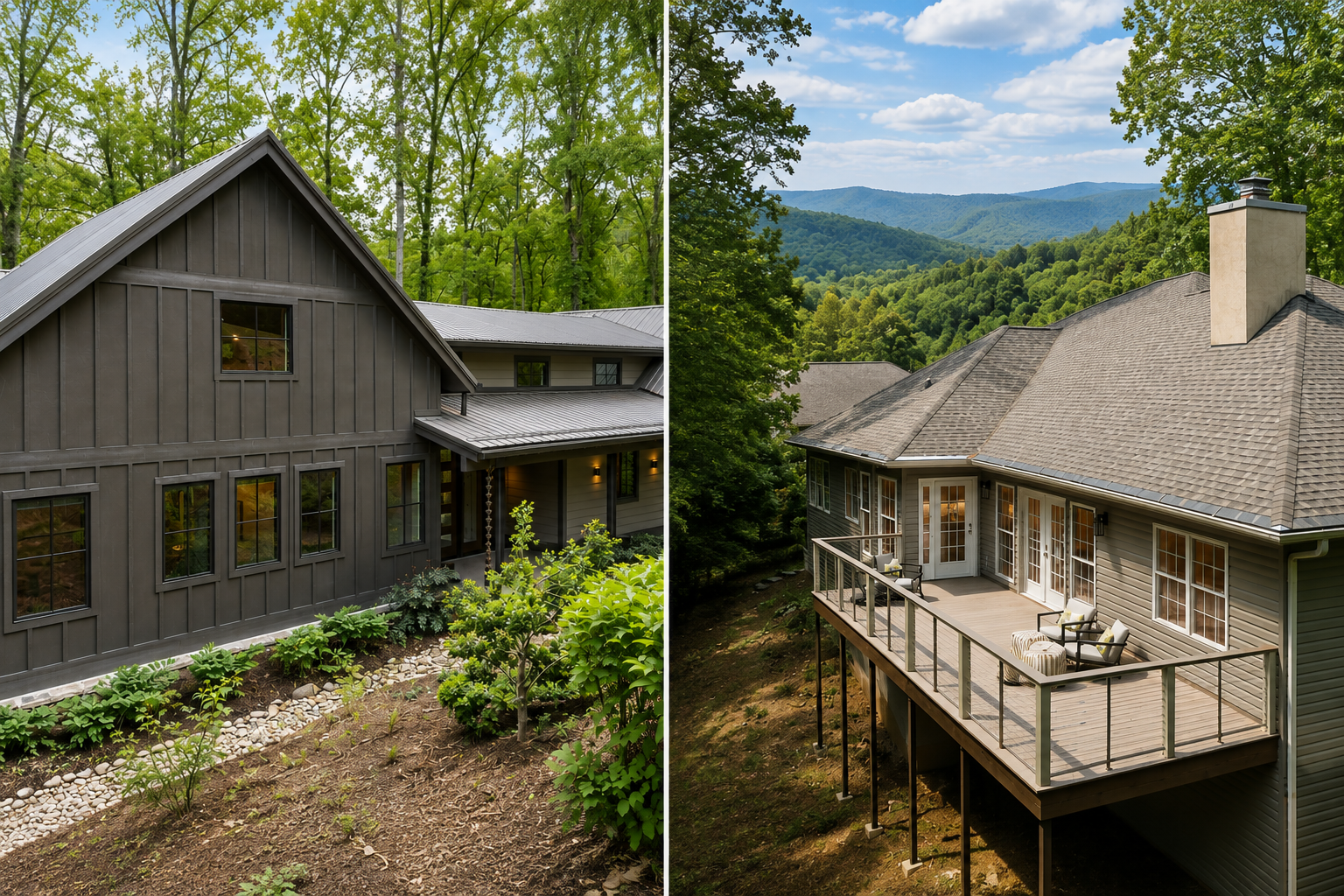
Two Hendersonville homes can have similar square footage and bedroom counts while offering completely different experiences. One might be close to downtown conveniences. Another could sit on a wooded lot with a mountain view. One may have a relatively level driveway, while another requires buyers to consider a steep approach. Properties can also differ in acreage, elevation, outdoor living space, private road access, well or septic systems, and other characteristics buyers notice.
Henderson County’s GISWeb gives the public access to property information, aerial imagery, maps, deeds, and real property data, which means buyers and their agents can research properties more easily than ever.
That is one reason I do not like pricing a home simply by multiplying its square footage by an average price per square foot. The numbers are useful, but the property itself still matters.
Why Pricing Slightly Below the Comps Can Sometimes Make You More Money
This is usually the part of the pricing conversation that makes sellers nervous.
If comparable properties suggest your home belongs around a certain value, why would we ever consider positioning it slightly below that number?
Because the highest asking price and the highest eventual selling price are not necessarily the same thing.
Pricing Below Comparable Sales Is Not the Same as Giving Your Home Away
There is a big difference between underpricing a home carelessly and positioning it strategically.
Imagine buyers are comparing several similar Hendersonville properties. Most seem reasonably priced, but one immediately looks like the strongest value. Which property are they likely to send to their spouse, ask their agent about, or schedule first?
Usually, it is the home that makes them think, “We should probably see this before somebody else does.”
That reaction is valuable.
A slightly more compelling asking price can bring more qualified buyers through the door during the period when the listing is receiving fresh attention. Instead of trying to convince one buyer to negotiate downward from an aggressive price, we may create a situation where several buyers recognize the value at approximately the same time.
That is where pricing becomes a marketing strategy rather than just a valuation exercise.
Can Strategic Pricing Create a Bidding War?
It can, but I never promise a seller a bidding war.
There are too many variables involved, including the property’s condition, location, price range, competing inventory, financing environment, and the number of qualified buyers looking at that particular moment.
What we can do is create conditions that make competition more possible.
Buyers Compete When They Believe Other Buyers See the Same Value
Suppose your Hendersonville home enters the market at a price buyers immediately recognize as attractive compared with similar listings. You may receive several showing requests close together.
Now imagine one buyer tours the property Saturday morning and learns there are additional appointments that afternoon. Suddenly, taking four or five days to think about the house feels riskier.
That buyer may decide to write an offer sooner. Another buyer may do the same.
This does not mean every competitive situation sends the price dramatically above asking. Sometimes competition produces a stronger price. In other cases, its value appears in cleaner terms, greater certainty, a preferred closing timeline, or a buyer who is less aggressive during negotiations.
What matters is that the seller has options.
I would rather enter negotiations with several genuinely interested buyers than start from an inflated price and wait for someone to make a low offer.
Why Overpricing Can Lead to Chasing the Market Down
The phrase I use for repeated price reductions is “chasing the market down,” and it is something I want sellers to understand before we list.
Overpricing usually does not feel like a serious mistake on Day 1.
The home goes live. Photos look great. Everyone is optimistic.
Then the showing requests are slower than expected.
A week passes. New competing properties come onto the market. Buyers who originally saw your listing begin purchasing other homes. Eventually, you decide to reduce the price.
The problem is that you cannot completely recreate your first day on the market.
Buyers Notice Price Reductions
A price reduction may absolutely be necessary when market feedback tells us we missed the mark. I would rather respond to real evidence than stubbornly defend a price buyers are rejecting.
What I want to avoid is a pattern of small reductions.
A listing starts at one price, drops a little two weeks later, drops again, and eventually reaches the range where buyers might have responded enthusiastically in the first place.
By then, the conversation has changed.
Instead of asking, “How quickly do we need to act?” buyers may start asking, “How much lower will the seller go?”
That is a very different negotiating position.
Current Hendersonville market conditions make this worth considering carefully. Zillow reported 509 homes for sale at the end of June 2026, while Redfin’s recent three-month data showed homes averaging roughly 81 days on market.
Every neighborhood and price point behaves differently, but those figures reinforce why I would rather enter the market thoughtfully than depend on buyers overlooking an ambitious price.
What Hendersonville Buyers Actually Care About
Pricing becomes easier when we stop thinking like owners for a moment and start thinking like buyers.
A buyer is usually asking a simple question: What am I getting for my money compared with my other choices?
For Hendersonville buyers, that comparison can include condition, location, usable outdoor space, views, accessibility, storage, garage space, updates, maintenance needs, and proximity to the places that matter to their lifestyle.
Some buyers may prioritize being closer to downtown Hendersonville. Others may prefer more privacy or land. A mountain view may carry tremendous emotional value for one buyer, while another is more concerned about driveway accessibility or long-term maintenance.
This is why seemingly similar properties do not always command similar prices.
What Buyers Do Not Care About Nearly as Much as Sellers Think
This is sometimes the hardest part of the pricing conversation because homeowners naturally see their property through years of investment and memories.
Buyers do not.
Buyers Do Not Pay for Sentimental Value
They do not know what you spent on the perfect nursery wallpaper or how many family holidays happened around the dining room table. Those memories are valuable to you, but they are not part of market value.
The same principle applies to improvements.
Spending $30,000 on a project does not automatically increase the home’s market value by $30,000. Some renovations produce strong buyer appeal. Others are highly personal. Buyers evaluate the result and how useful it is to them, not simply what it cost you.
Buyers Do Not Care What You Need to Net
Maybe you need a certain amount from the sale to purchase your next home. Perhaps you recently completed expensive improvements and want to recover every dollar. Those goals matter when we discuss whether selling makes financial sense for you.
They do not determine market value.
A buyer compares your property with other available homes. They do not increase their offer because the seller needs additional proceeds for their next move.
Buyers Do Not Care About an Online Estimate When the House Tells a Different Story
Automated valuations can be useful starting points, but Hendersonville properties often contain nuances algorithms cannot fully understand.
An automated system can process recorded square footage, lot size, and nearby transactions. It cannot stand in the driveway and understand how the slope feels. It cannot experience the mountain view from the porch, evaluate how private a wooded lot feels, or fully judge whether updates make a home feel truly move-in ready.
That is why I use technology as one piece of the pricing conversation rather than allowing an automated estimate to decide for us.
Price for the Hendersonville Buyer Who Is Shopping Today
One of the most important questions I ask when pricing a property is not simply, “What have similar homes sold for?”
I also want to know, “What can a buyer purchase instead of this home right now?”
Active competition matters because those are the listings buyers will see beside yours online.
A Hendersonville buyer may also consider nearby areas depending on lifestyle and commute needs. That means the competitive set is not always limited to the houses on the same street or even the same ZIP code.
Our local geography adds another layer. Henderson County maintains extensive GIS and real property resources covering parcels, aerial imagery, land records, deeds, and other geographic information. Buyers have access to more property information before scheduling a showing, so pricing needs to make sense within the larger story the property tells.
Selling Fast Does Not Automatically Mean You Left Money on the Table
I sometimes hear sellers worry that if their home sells immediately, they must have priced it too low.
A quick sale alone does not tell us that.
If thoughtful pricing generates strong showing activity, multiple interested buyers, competitive offers, and favorable terms, the strategy may have worked exactly as intended.
I care much more about the outcome than whether we managed to keep your listing active for an arbitrary number of days.
The objective is not to sell your Hendersonville home as cheaply or quickly as possible. It is to find the price that creates enough buyer confidence to generate action while still protecting the value you have built.
That is why I focus so much on recent comparable sales, current competition, and buyer behavior.
I would rather use the most relevant three months of data available than anchor your expectations to an old neighborhood sale. I would rather discuss whether a slightly more compelling price could increase competition than automatically choose the highest number. And I would rather price thoughtfully from the beginning than spend the next six weeks chasing the market down.
Most importantly, I want to price the home buyers are actually purchasing, not the home an algorithm, an old comparable, or sentimental attachment tells us should exist.
Hendersonville is too varied for one simple formula. A property close to downtown, a wooded mountain home, a house with acreage, and a home with easier access and a level lot can attract very different buyers even when their basic statistics look similar.
The right price brings all of those pieces together.
When we understand what has sold recently, what buyers can choose from today, what makes your particular Hendersonville property valuable, and where buyers are most likely to become excited rather than hesitant, we can enter the market with a strategy designed to do both things sellers care about most: sell without unnecessary delays and protect as much of your home’s value as the market will support.